


Life goes on...
About the Spirit,
the Mind
and many other things...

| About the Physics of the Cell, | |
| the Physics of the Brain, | |
| the Physics of the Energy |







Feodor Shkrudnev
My dear friends!
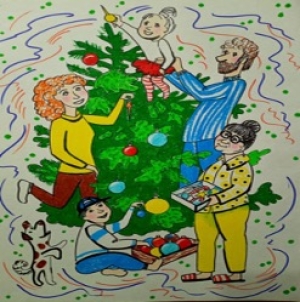
According to the Eastern calendar, 2024 is the Year of the Green Wooden Dragon. It is believed to be PROSPEROUS and HAPPY, and a good time for starting NEW VENTURES and projects. We are entering an unusual, engaging, and eventful year. However, we do not live solely by the Eastern calendar. Together with you, we live with an understanding of what is happening today, and based on our knowledge, we foresee what lies ahead for us.
Video of 001_369 Salvation of Saviors, or still… look for the ways
Our consciousness is so structured that it denies unsolvable problems.
Does the consciousness decide what to solve? Our Brain is designed in such a way that it avoids unsolvable problems — “it is still in its infancy” by its octave or level of development — whatever is more convenient, the negative result is important.
051_369 A new reality…
Nowadays we live in the society that has neither purpose, nor idea. And without them, any society is NOT JUST dying, it is becoming demoralized. I am sure that in such a situation, the best minds should focus not on discussing the ongoing, but on the reason that generates these events. If it drips from the ceiling, you have to fight with the hole in the roof, not with the puddle on the floor. Naturally, everyone will answer all the life questions put to him in one way or another. Whether he comprehends it or not is the second question. The main thing is that he will definitely live his life in one direction or another. If he chooses the direction himself, he is a Person.
050_369 With your heart and mind…
Planes are crashing... People are dying... All platforms are trumpeting about odiousness and heroism in various conjectures and interpretations. The “mighty of this world” speak out, with their explanations aggravating the confusion in understanding the ongoing, but for some reason no one asks the question - why is this happening? What is the basis of all this? Why do people behave the way they do and not otherwise and do not even think about it? There are many who have VERY CONTRADICTORY feelings, most often critical, and they have more than enough reasons, but there is NO EXPLANATION why exactly this way and not otherwise, not superficial explanations, but those based on one’s own knowledge, which is impossible without the true information.
044_369 Realities that are realizing…
In something you like, you exaggerate the pros and downplay the cons. And, on the contrary, you exaggerate the cons and downplay the pluses if you do not like something.
It is impossible to convince a person of what he SUBCONSCIOUSLY DENIES. This applies even to science. As Max Planck said, science develops from funeral to funeral. The bearers of the old do not give way to the new, not because they see some faults, but because they do not like it.
043_369 To understand and realize…
For more than thirty years, we have been creating certain societies, focusing on certain ideas that provoke more and more amazement over the years. But after all, no one removes them from the agenda. The idea of rebuilding the world seems to most people to be an EMPTY FANTASY, not because they consider the goal unworthy or see logical errors, but because the scale confuses them. So an ant — it will take the matter seriously only within the framework of its anthill. It WILL NOT COME UP with the idea of activities outside its home. The same way people evaluate the ongoing today with domestic, commercial ... maximum — political benefits (which is the same commerce).
The structure of the Russian farm

This book, compiled from archival sources, shows the main environmentally friendly methods of land development, estate construction, breeding of various livestock and poultry, which were used by Russian farmers at the beginning of the XX century (1902-1910) and a significant part of which is now forgotten or lost.
The book is intended for farmers, tenants, gardeners and other individual land users who are forced to independently solve the issues of the most effective development of their land plot, while receiving environmentally friendly products.
042_369 Leadership Control
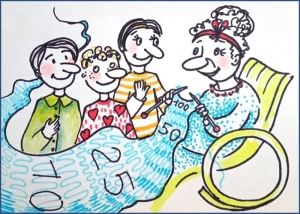
Our consciousness creates the world. The old consciousness lives in the old world. The new consciousness manifests a new world. It is an axiom.
Attention! – Month of March…

One thought generates five more thoughts. Each of the five can generate another five thoughts. This is how theses and ideas about what you want to write are begotten. The thought has ruffled the memories ... The memories about the events of 1908 when 15,000 women in New York demonstrate d, demanding shortening the working day, an increase in wages and the right to vote (in most states, women gained it in 1920, when the 19th amendment to the US Constitution was adopted). The following year, the American Socialist Party proposed that the last Sunday in February be Labor Women's Day. In August 1910, the well-known figure of the German social democracy Clara Zetkin, at a conference in Copenhagen, proposed the establishment of an International Day to Struggle for Women's Equality and Emancipation.
041_369 Waiting at the “door”…

It seems to me wrong to consider any questions of our life, of our existence as such outside of the current events. For some reason, all comparisons are lame, but this does not mean that we do not compare anything or all the comparisons are meaningless.